


Conquer Countries
4.33.23K Reviews
App Specs
- Version
- 9.65.1
- Updated On
- License
- Free
- Downloads
- 10,000,000+
- Developer
- Supersonic Studios LTD
- Categories
- Role Playing
- Platform
- Android, iOS
Screenshots
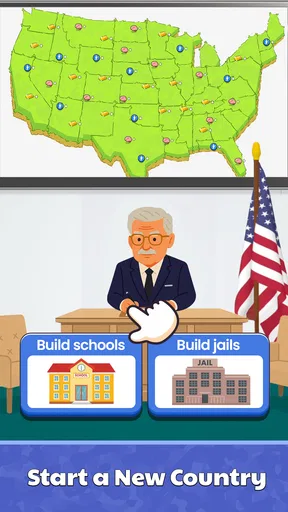
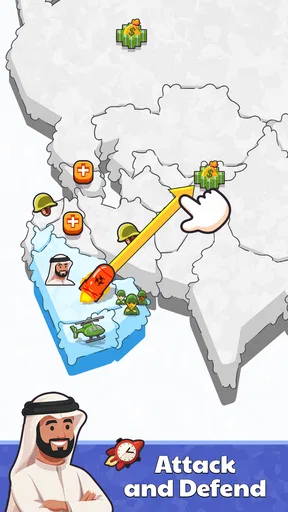

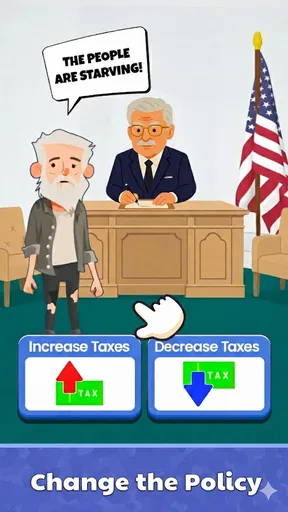
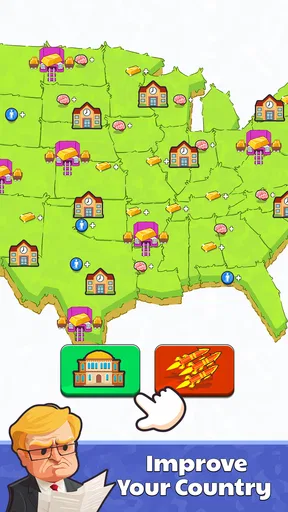

 Analysis by AppCompare
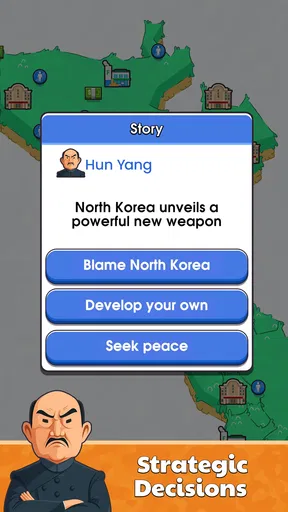
I went into Conquer Countries expecting a quick map game, but the appeal is really in weighing each move against the territory and opponents around it. It is a free role-playing strategy game from Supersonic Studios LTD, built around the simple aim of expanding across a world map. That premise is easy to grasp, yet a good run depends on thinking beyond the next country. If you enjoy compact decisions with a clear sense of progress, it is worth a closer look; if you want a sprawling strategy simulator with detailed systems to manage, you may find its approach too streamlined.
Choosing where to push
Once you fire up Conquer Countries, you’re greeted with a straightforward tutorial that eases you into the game mechanics. It’s perfect for both newbies and seasoned strategy enthusiasts. The interface is sleek and intuitive, making it easy to navigate through the various game modes and options. I was impressed with how quickly I could jump into a game and start strategizing.
The useful question is not simply which country looks like the easiest target, but what taking it might leave exposed. I try to think in short chains: a move should improve my position, create a useful next option, or prevent an opponent from gaining an advantage. That way, expansion becomes a plan rather than a string of tempting clicks. The map gives the decision-making a geographic frame, so even a simple choice can feel consequential when it changes what I can reach next.
For a quick session, I would set one modest goal before starting: secure a particular route, strengthen a vulnerable edge, or make progress without overcommitting. That self-imposed focus helps when the full map makes every direction look promising. It also gives a natural stopping point. If I only have a few spare minutes, I can enjoy the immediate choices without pretending I have time to manage a long campaign.
Gameplay Experience
Here’s where things get exciting. The gameplay revolves around building your empire, managing resources, and engaging in battles with other players. What I loved most is the real-time strategy element mixed with turn-based tactics. It feels like a chess game on steroids, where every move counts and could mean the difference between victory and defeat.
That mix makes timing worth considering. A move can be locally attractive while being strategically awkward if it leaves my wider position less flexible. I find it helpful to pause before committing and ask what the move gains immediately, what options it opens, and what it might cost if another player responds. It is a small habit, but it turns a reactive run into something more deliberate.
The risk-reward balance is clearest when expansion starts to compete with consolidation. Chasing one more area may feel productive, but pushing too far can make the next decision harder. I prefer to take a moment to check whether a new gain actually supports the direction I have chosen. If it does not, holding back can be the smarter play. The game’s appeal lies in those tradeoffs more than in simply trying to claim as much as possible at once.
Worth Reading Before You Choose

Flipboard Shows What News Apps Must Do Beyond the Feed

Switching to Android Auto Means Rethinking Your Driving Routine

Google Calendar Makes a Crowded Week Easier to Manage

Ludo King Makes the Most of the Minutes Between Plans

Baby Panda World Brings Quick Play to Modern Phones, but Its Game Library Feels Busy

ESPN’s Live Game View Makes Following Close Games Easier
For an everyday example, imagine opening the game while waiting for a friend or taking a short break. Rather than beginning with a complicated objective, I would pick one immediate priority, make a few considered decisions, and stop when the next move would need more attention than I can give. That is a better fit for a brief session than starting with a sprawling plan and then rushing through it. The map-driven format makes small bursts of play approachable, while the strategic choices reward returning with a clear head.
The multiplayer element changes how I think about predictability. Against other players, a choice is not made in a vacuum, so I avoid assuming that an obvious expansion route will remain unchallenged. A useful approach is to keep more than one possible next step in mind. If the first route becomes unattractive, having an alternative helps me respond instead of doubling down just because I already invested in a plan. I would not treat every match as a puzzle with one perfect answer; adapting to the position is part of the fun.
Reading the map and adapting
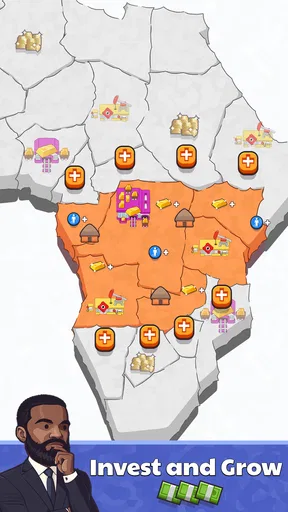
The map is expansive, offering a wide variety of terrains and regions to conquer. Each area presents unique challenges, and you must adapt your strategy accordingly. The multiplayer mode is particularly thrilling, as you can test your skills against other players worldwide. I found myself hooked, constantly thinking about my next move even when I wasn’t playing.
That lingering thought is enjoyable when I am mulling over a strategy, but it can also be a sign to take a break rather than keep replaying every choice in my head. I find the game works best when I treat each decision as information: a promising route may prove awkward, and a setback can be a cue to change direction rather than repeat the same push. The practical skill is not predicting everything correctly; it is noticing when the board no longer supports the plan I began with.
A small planning trick is to separate a goal from the route to it. I might want to broaden my position, but I do not need to commit to one exact sequence of moves. Keeping the objective steady while reconsidering the route makes it easier to respond to another player’s actions. This is especially useful in multiplayer, where a rigid plan can become stale as soon as the situation changes.
Compared with familiar mobile strategy alternatives, this is more about a shared map and territorial choices than about building a detailed settlement, commanding a long campaign, or managing a large roster of units. That focus is a strength if you want decisions you can understand quickly. It is also a limitation if the pleasure you seek comes from elaborate base development, extensive customization, or a deep solo narrative. I would choose a more simulation-heavy strategy game for those needs; here, the attraction is the immediate contest over where to expand and how to respond.
The role-playing label may set expectations of character development or story progression, but I would approach this primarily as a map-based strategy game. Its central appeal is planning, expansion, and competition rather than a character-led adventure. That distinction matters if you are browsing specifically for a traditional RPG. If you are open to a broader strategy experience, the game’s accessible premise is easier to appreciate on its own terms.
Visuals and Sound
The graphics are vibrant and detailed, bringing the world map to life. The animations during battles are smooth and add an extra layer of excitement. Pair this with a dynamic soundtrack that changes based on the action, and you’ve got an immersive experience that keeps you engaged for hours. I particularly enjoyed the little sound effects that punctuate your decisions and successes.
The presentation supports the map-focused play by making the action easy to follow, rather than asking me to learn a complicated interface before I can make a choice. In a short session, that readability matters: I can concentrate on the position instead of fighting the controls. The tradeoff is that players who want visual storytelling or highly detailed battlefield management may want more than this style offers. I see the visuals and sound as atmosphere around the decisions, not the main reason to stay.
When I am playing somewhere that calls for quiet, I would consider lowering or muting the sound and relying on the visual feedback. The little cues are pleasant, but the core appeal is the map and the choices I make on it. That makes it easier to fit the game into a waiting-room pause or a commute break without needing the soundtrack to carry the experience. The best session is one where I can give the decisions attention, even if I am not treating the game as a full evening activity.
Who will enjoy the tradeoffs
I think the game is best suited to someone who likes strategic choices but does not want a dense rulebook before the first match. The tutorial lowers the initial barrier, and the map gives each decision a visible context. People who enjoy weighing a short-term gain against a broader position will find more to think about than the brief premise suggests. It can also suit players who want multiplayer competition to make familiar expansion choices less predictable.
I would recommend skipping it if you need a quiet, purely offline narrative experience, or if you dislike competing over territory with other players. It is also not the best match for someone who expects a traditional role-playing game centered on a protagonist, dialogue, or character builds. Those are different pleasures. Here, I would come for the strategic contest and the satisfaction of adjusting a plan as the map changes.
It is free to start, and optional in-app purchases range from $0.99 to $49.99 per item. I would treat those purchases as a personal spending choice rather than a reason to rush. First see whether the basic decision loop holds your interest, and decide later whether anything offered is worth paying for. That approach is useful in any free-to-play game: the important question is whether you enjoy the play itself before spending, not whether a purchase might make a first session feel more exciting.
The game is rated for Everyone and requires Android 6.0 or later. Its current version is 9.42. Those details make it easier to check basic fit before downloading, especially if you are choosing a game for a younger player or installing on an older Android device. It has a 4.2 average from around 224,000 ratings, alongside about 2,700 written reviews and over 10 million installs. That level of uptake suggests many people have tried it, though I would still judge it by whether its map-based decisions suit my own taste.
Depth over time
In a world full of mobile games, Conquer Countries stands out for its depth and replayability. It’s not just about mindless tapping; it requires strategic thinking and planning. Whether you’re a fan of strategy games or just looking for something new to try, this app is worth a download. It’s free to play, with optional in-app purchases that enhance the experience without being intrusive.
Replay value, for me, comes from the changing context around familiar choices. I can return with a different priority, be more cautious about where I stretch, or try to respond more flexibly when another player alters the situation. That is a satisfying kind of depth, but it should not be confused with a huge catalogue of systems. If you want progression built around extensive crafting, character equipment, or a long narrative, this is not where I would look. Its learning curve is more about improving judgment than memorizing a sprawling set of mechanics.
One practical way to keep that learning useful is to review a match in plain language afterward: which decision paid off, where did I become too committed, and what could I have kept open as an alternative? I do not need to turn play into homework; even one observation can make the next session feel more intentional. Because the central challenge is deciding how to expand and adapt, reflecting on choices is more helpful than simply repeating a winning opening.
Supersonic Studios LTD has kept the concept easy to approach, and I appreciate that the game does not require me to begin with a long explanation of its premise. Still, simple access does not mean every session will be equally satisfying. A match can feel less engaging if I want a slower, more contemplative solo experience, while the competitive side is a better fit when I am in the mood to read the map and adjust to other players. Knowing which mood I am in helps me decide whether to launch it or pick a different game.
My strategy verdict
So, if you’re ready to channel your inner strategist and take on the world one country at a time, give Conquer Countries a shot. Who knows? You might just become the ultimate conqueror!
My recommendation is to try it when you have enough attention to make choices thoughtfully, even if you only have a short window to play. Start with the tutorial, avoid expanding just for the sake of expansion, and keep a fallback route in mind when competing with other players. Those habits make the central loop more rewarding and help reveal whether its particular brand of strategy is for you.
Overall, I see it as an approachable, map-centered strategy game with a useful balance of immediate decisions and longer-term planning. Its limits are part of that focus: it is not a substitute for a deep empire simulator or a story-led role-playing adventure. But if you enjoy territorial competition, can accept that plans may need to change, and want a free game that is quick to understand, I would give it a try. The best reason to stay is not simply the promise of conquering more ground; it is the satisfaction of choosing carefully when to advance, when to wait, and when to rethink the plan.
Pros
- Engaging and strategic gameplay.
- Wide variety of maps and challenges.
- Smooth and intuitive interface.
- Regular updates enhance features.
- Multiplayer mode for global competition.
Cons
- Requires internet for some features.
- In-app purchases can be pricey.
- Occasional connectivity issues.
- Ads can interrupt gameplay.
- Learning curve for beginners.
FAQs for Conquer Countries
What is the main objective of Conquer Countries?
Conquer Countries is a strategy game where players aim to expand their territory by conquering various countries. The primary objective is to build a powerful empire by tactically managing resources, forming alliances, and engaging in battles. Players must strategically plan their moves to outsmart opponents and achieve global domination.
Is Conquer Countries free to play?
Yes, Conquer Countries is free to download and play on both Android and iOS platforms. However, the game includes in-app purchases and optional ads, which can enhance gameplay by providing additional resources or unlocking premium features. Players can enjoy the core game without spending money, but purchases can offer strategic advantages.
What devices are compatible with Conquer Countries?
Conquer Countries is available for both Android and iOS devices. It supports a wide range of smartphones and tablets, but it’s important to check the specific system requirements on the app store. Ensuring your device is updated to the latest operating system will provide the best gaming experience and minimize potential issues.
Does Conquer Countries require an internet connection?
Yes, Conquer Countries requires a stable internet connection to play. This is essential for accessing real-time multiplayer features, updates, and cloud saving options. An internet connection ensures players can participate in global events and battles, and sync their progress across devices, providing a seamless gaming experience.
Are there any age restrictions for playing Conquer Countries?
Conquer Countries is rated for players aged 12 and up due to its strategic gameplay and in-app purchase options. The game involves planning and decision-making, which may be more suitable for older children and adults. Parents should review the game’s content and settings if younger children are interested in playing.


